Should You Upgrade from Tp Link Archer Be9700 to Geekom A5?
Category: Laptops
Introduction
At first glance, the question "Should you upgrade from Tp Link Archer Be9700 to Geekom A5?" reads like a mismatch: one product is widely known as a networking device and the other as a compact desktop/micro-PC. Yet buyers often face cross-category decisions when reorganizing a home office, consolidating devices, or changing primary use cases. This article separates the confusion from the decision by explaining what each product actually does, laying out realistic scenarios where someone might consider replacing or supplementing one with the other, and offering a practical framework to decide which option — or combination — makes sense for specific real-world needs.
Quick framing: different categories, different roles
The Tp Link Archer Be9700 is principally a networking appliance designed to provide Wi‑Fi and routing functions for a household or small office. The Geekom A5 is a mini PC — a compact, general-purpose computing device that runs desktop applications. They are not direct substitutes in the narrow sense: a router cannot replace a PC for content creation, and a mini PC cannot serve as a full-featured Wi‑Fi access point for many devices without additional hardware or software configuration.
That said, some buyers ask this question because they are consolidating gear, moving to a compact home office, or replacing an older integrated device (for example, an ISP-supplied gateway that included both routing and limited computing). The rest of the article analyzes the strengths and limits of each product, the pros and cons, and decision criteria tailored to common buyer priorities.
Product analysis: Tp Link Archer Be9700
The Tp Link Archer Be9700 is built to be a modern home/SMB router that prioritizes wireless performance, device density, and network features. Typical selling points for devices in this class include:
- High wireless throughput: Designed for fast Wi‑Fi on multiple bands to support streaming, gaming, and many smart-home devices simultaneously.
- Network management features: Quality-of-Service (QoS), guest networks, parental controls, and easy setup via mobile apps or web UI.
- Multiple wired ports: Gigabit LAN ports and often one or more multi-gig or USB ports for local storage or peripherals.
- Low maintenance for end users: Plug-and-play setup, firmware updates handled through the vendor app, and minimal ongoing administration.
Real-world use cases where a device like the Archer Be9700 shines:
- Homes with many Wi‑Fi devices (phones, tablets, smart TVs, security cameras) where wireless stability is the priority.
- Streaming 4K/8K video in multiple rooms with minimal buffering.
- Online gaming households that need low latency and simple device prioritization.
- Small offices that need a central point for DHCP, firewall, and basic remote access.
What buyers typically care about when choosing this type of router: wireless range and throughput, ease of setup, parental controls, security updates, and whether the router supports the latest Wi‑Fi standard and multi-gig wired backhaul.
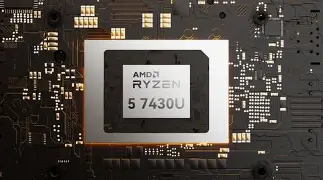
Pros & Cons — Tp Link Archer Be9700
- Pros
- Optimized for reliable, high-performance wireless networking across many devices
- Plug-and-play setup with vendor-managed firmware and security patches
- Good for households that prioritize streaming and device connectivity
- Cons
- Limited or no general-purpose computing capability — not suitable for desktop applications
- Feature set and advanced customization may be constrained by vendor firmware
- When a router is outdated, replacing it doesn’t address needs for desktop performance
Product analysis: Geekom A5
The Geekom A5 is a compact mini PC designed to provide desktop-level computing in a small footprint. These devices target buyers who want the performance of a desktop without the space or noise. Key attributes of mini PCs like the Geekom A5 typically include:
- Modern mobile-class processors: Efficient multi-core chips that handle office work, media playback, light content creation, and casual gaming.
- Upgradeable RAM and storage: Many mini PCs offer SODIMM RAM slots and M.2 SSD slots for straightforward upgrades.
- Multiple display and I/O options: HDMI/DisplayPort outputs for multi-monitor setups, USB-A/C ports, and sometimes Ethernet for wired networks.
- Low power draw and compact design: Good for small desks, living rooms, or digital signage.
Real-world use cases where the Geekom A5 excels:
- Home office users who need a capable machine for web-based work, office suites, video calls, and light photo/video edits.
- Media hubs connected to a living-room TV for streaming, local playback, and occasional light gaming.
- Developers or students who need a stable desktop environment but have limited desk space.
- Edge computing scenarios where a small form factor PC runs local services, virtual machines, or lightweight servers.
What buyers typically care about when choosing a mini PC: CPU performance per watt, memory and storage expandability, connectivity (USB, HDMI, Ethernet), upgrade paths, thermal performance (does it throttle under sustained load?), and noise levels.
Pros & Cons — Geekom A5
- Pros
- General-purpose computing suitable for productivity, media, and many creative tasks
- Compact, energy-efficient, and quieter than full-size desktops
- Often upgradeable RAM and storage, increasing longevity
- Multiple display outputs and modern I/O for peripherals
- Cons
- Not a replacement for enterprise-grade servers or high-end gaming desktops
- May lack advanced GPU power for heavy 3D rendering or AAA gaming at high framerates
- Doesn’t replace router functionality — an additional networking device is usually still required
Comparison table
| Category | Tp Link Archer Be9700 | Geekom A5 |
|---|---|---|
| Primary function | Wireless router / network gateway | Mini desktop PC / workstation |
| Ideal for | Providing Wi‑Fi, device connectivity, network security | Productivity, media playback, light content creation, compact desktops |
| Compute power | Minimal — focused on network processor tasks | Moderate to high for everyday desktop workloads (depends on CPU configuration) |
| Connectivity | Multiple Wi‑Fi bands, WAN + LAN ports, vendor features (QoS, guest) | Ethernet port(s), multiple USB (A/C), HDMI/DisplayPort, Bluetooth (varies by model) |
| Upgradeability | Limited — firmware updates only | Often supports RAM and SSD upgrades |
| Power consumption | Low-to-moderate (always-on device) | Low compared to desktops, but higher than a router under load |
| Noise | Usually passive or low-noise (depends on model) | Quiet to moderate (fan-cooled under load; depends on cooling design) |
| Typical buyer concerns | Range, throughput, security, mesh compatibility | Performance, expandability, ports, thermal/noise profile |
When it makes sense to "upgrade"
The word "upgrade" implies replacing something with something better that fulfills the same role. Because a router and a mini PC serve different roles, an upgrade is only sensible in specific contexts.
Shop the latest Laptops & Computers picks on Amazon.
Shop Amazon →Consider these scenarios where buying a Geekom A5 would be the right move after (or instead of) a Tp Link Archer Be9700:
- Upgrading the workstation, not the network: A user who already has strong Wi‑Fi coverage (from the Archer Be9700) but needs a faster machine for video calls, editing, or multitasking should buy the Geekom A5. This is an upgrade in computing, not networking.
- Replacing an old integrated gateway/computer combo: Some people use an all-in-one gateway or an old NAS with limited apps. Replacing that with a dedicated router (Archer Be9700) plus a compact PC (Geekom A5) can split responsibilities and improve both networking and compute performance.
- Edge computing / local services: If a household wants to host local services (home automation hubs, media server, lightweight cloud), the Geekom A5 can take over compute tasks while the Archer Be9700 continues to manage the network.
Conversely, replacing a router with a PC only makes sense if the buyer is prepared to configure advanced networking software on the PC (for example, using Linux distributions as a router, custom firewall stacks, and dedicated Wi‑Fi access points connected to USB or PCIe radios). For most users, that is more complex and less reliable than a consumer router designed for the job.
Buying guide: how to decide
Use this checklist to decide whether the Geekom A5 is the right purchase alongside, or instead of, the Tp Link Archer Be9700.
1. Identify the problem
Is the main issue slow internet, weak Wi‑Fi, or an underpowered desktop? Fixing a slow computer typically requires a PC upgrade. Fixing network lag or range issues requires a better router or mesh system.
2. Prioritize tasks and performance needs
- If the household needs multiple simultaneous 4K streams, low-latency gaming, and many smart devices, network investment (router, mesh, wiring) is important.
- If the user needs video-editing, virtualization, compilation, or multi-tab heavy productivity, a mini PC is the better investment.
3. Consider expandability and lifespan
Mini PCs that allow RAM and SSD upgrades will age better for compute tasks. Routers with firmware updates and modular mesh support will remain relevant longer for networking needs.
4. Think about noise, power, and space
Mini PCs consume more power than routers when active and may produce fan noise during heavy workloads. For 24/7 always-on services (Plex, home automation), consider power costs and thermal behavior.
5. Evaluate integration and complexity
Setting up a mini PC as a router or network appliance introduces complexity. For users who want simple, stable Wi‑Fi, a dedicated router is usually easier to manage and troubleshoot.
6. Budget allocation
Match budget to priorities. For many households, balancing both investments makes sense: a good router for network reliability and a compact PC for modern productivity, rather than choosing one over the other.
7. Future-proofing
Buy devices that support current standards (modern Wi‑Fi, fast Ethernet, NVMe storage, current-generation CPU) without overspending on features that won’t be used. Consider the upgrade path — is there room to add RAM or an SSD later?
Practical buying scenarios and recommendations
Scenario A — Remote worker with poor video-call performance
Problem: Frequent droplinks and sluggish performance during video calls.
Looking for the best Laptops & Computers deals on Amazon?
See Deals →Recommendation: Start with the network — ensure the router (e.g., Tp Link Archer Be9700) is placed and configured correctly (wired backhaul for critical devices, QoS to prioritize video calls). If the laptop or workstation is still struggling (CPU/ram bottleneck), add a Geekom A5 as a dedicated home office machine.
Scenario B — Small family that streams and plays games
Problem: Buffering in multiple rooms, occasional lag for online games.
Recommendation: Invest in the router and potentially a mesh system. The Geekom A5 will improve a single-person workstation experience but won’t fix shared Wi‑Fi congestion.
Scenario C — Compact desk, limited space, needs a home server
Problem: Wants a device for home media, light home-lab, and a quiet desktop.
Recommendation: The Geekom A5 is a good choice. Keep the Archer Be9700 or an equivalent router for networking; the mini PC can run server roles while the router handles traffic management.
Final considerations: compatibility and integration
When adding a mini PC to a network managed by a router, pay attention to these points:
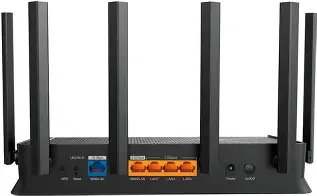
- Use wired Ethernet for the mini PC when possible for stability and lower latency.
- Reserve IP addresses or configure static IPs for hosts that need consistent access (e.g., servers, NAS, printers).
- If the mini PC will run services accessible from the internet, secure them with firewalls, VPNs, and strong credentials; leave the router to manage NAT and external exposure carefully.
- Consider where to place both devices: the router should be centrally located for wireless coverage, while the mini PC can live on a desk or shelf with good ventilation.
Conclusion
Upgrading from a Tp Link Archer Be9700 to a Geekom A5 is not a like-for-like swap: they solve different problems. For most users, the right approach is complementary rather than substitutive. The Archer Be9700 (or an equivalent modern router) remains the essential device to provide stable, fast Wi‑Fi and network services, while the Geekom A5 is an excellent option when the need is for compact, capable computing — a true upgrade to workstation or home-server capabilities.
Decide based on the primary bottleneck: if network performance and device connectivity are the issue, invest in network hardware and optimization. If compute power, expandability, and a small-footprint desktop experience are the issue, a mini PC like the Geekom A5 is a worthwhile upgrade. In many households the best outcome is to have both: a reliable router managing the network and a compact PC handling the compute tasks.