The Real Truth: Fujifilm Instax Mini 41 or Sony Fe 28-70mm F2 GM?
In the expansive world of modern photography, it is rare to find two pieces of equipment that occupy such diametrically opposed ends of the technological spectrum. On one side, we have the Fujifilm Instax Mini 41, a device rooted in the tactile, chemical joy of instant analog photography. On the other, we see the Sony FE 28-70mm F2 GM, a pinnacle of digital optical engineering designed to replace several prime lenses with a single, high-performance zoom. For many photographers, the question is not necessarily about which one is "better" in a vacuum, but rather which philosophy of image-making aligns with their current creative needs. This deep dive explores the nuances of both, stripping away the marketing hype to understand the real-world utility of these two iconic tools.
The Evolution of Instant Gratification: Fujifilm Instax Mini 41
The Fujifilm Instax Mini 41 represents the latest iteration of a series that single-handedly saved analog film from the brink of obsolescence. While professional digital cameras have become increasingly clinical and complex, the Instax Mini 41 doubles down on simplicity. It is an entry point into the "Cameras" category that prioritizes the experience of the moment over the perfection of the pixel. For shooters who are tired of managing cloud storage and post-processing RAW files, the Mini 41 offers a refreshing return to the physical world.
Technical specifications in the instant film world are often secondary to character, but the Mini 41 introduces several refinements that make it more reliable than its predecessors. The lens remains a fixed focal length, roughly equivalent to a 35mm wide-angle on a full-frame sensor, providing a natural perspective for social gatherings, portraits, and travel snapshots. The major leap forward in this generation is the improved auto-exposure system. In previous versions, users often struggled with blown-out highlights or murky shadows. The Mini 41 utilizes advanced light sensors to calculate shutter speed and flash intensity with greater precision, ensuring that the credit-card-sized prints come out with consistent skin tones and visible backgrounds, even in challenging indoor lighting.
The ergonomics of the Mini 41 have also been subtly elevated. The grip is more contoured, catering to both younger enthusiasts and seasoned photographers who want a secondary "fun" camera. The inclusion of a dedicated "Close-up Mode" is a significant functional upgrade, allowing the lens to focus on subjects as close as 30 centimeters. This makes it a viable tool for macro-adjacent photography, such as capturing details of food, flowers, or intricate textures, which the chemistry of Instax film renders with a dreamlike, soft-focus aesthetic.
Pros and Cons of the Fujifilm Instax Mini 41
- Pros: Exceptional ease of use requiring zero technical knowledge; creates irreplaceable physical artifacts; improved auto-exposure leads to fewer wasted (and expensive) film sheets; compact and lightweight design is perfect for events; "Close-up Mode" expands creative versatility for selfies and detail shots.
- Cons: High recurring cost per shot due to film prices; lack of manual controls limits creative agency in complex lighting; fixed lens offers no zooming capabilities; lower resolution compared to any digital alternative.
The Engineering Marvel: Sony FE 28-70mm F2 GM
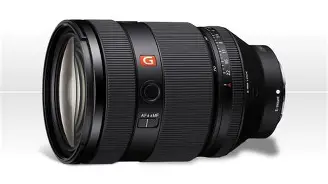
Moving from the whimsical analog world to the cutting edge of the G Master series, the Sony FE 28-70mm F2 GM is a lens that defies traditional optical physics. Traditionally, zoom lenses with a constant aperture were limited to f/2.8. Sony has pushed the boundary to f/2, offering a full stop more light-gathering capability. This lens is designed for the professional who demands the shallow depth of field typically reserved for prime lenses but requires the versatility of a zoom to capture fast-moving events.
When analyzing the Sony FE 28-70mm F2 GM, one must look at the glass itself. It incorporates XA (Extreme Aspherical) elements, ED (Extra-low Dispersion) glass, and Super ED elements to virtually eliminate chromatic aberration and "onion-ring" bokeh. For wedding photographers and photojournalists, this lens is a game-changer. It allows them to shoot a ceremony at 28mm for wide environmental shots and then instantly zoom to 70mm for a tight, intimate portrait—all while maintaining an f/2 aperture that creates beautiful subject separation and handles low-light venues with ease.
The autofocus performance is powered by XD (Extreme Dynamic) Linear Motors. This means the lens can track a subject’s eyes with surgical precision even when the photographer is moving or the subject is navigating a crowded space. The build quality is equally impressive, featuring extensive weather sealing and a fluorine coating on the front element to repel water and oil. It is a heavy lens, certainly, but its weight is the trade-off for its unprecedented specifications. It effectively replaces the need to carry 28mm, 35mm, 50mm, and 85mm prime lenses, potentially lightening a pro's total kit weight even if the individual unit is substantial.
Pros and Cons of the Sony FE 28-70mm F2 GM
- Pros: Unmatched optical clarity and sharpness across the entire zoom range; f/2 aperture provides prime-lens-like bokeh and low-light performance; lightning-fast and silent autofocus; robust weather-sealed construction for professional environments; programmable focus hold buttons for customized workflow.
- Cons: Substantial physical weight and size can be taxing for long handheld sessions; extremely high entry price; requires high-end full-frame Sony bodies to truly shine; lacks internal optical stabilization (relying on camera body IBIS).
Comparing the Experiences: A Tale of Two Realities
Comparing these two products is an exercise in understanding user intent. A buyer considering the Instax Mini 41 is likely looking for "vibe" and memory-making. They want a tangible result they can hand to a friend or pin to a fridge. The Sony FE 28-70mm F2 GM buyer is looking for "throughput" and "perfection." They are often working in a commercial capacity where the cost of a missed shot is measured in dollars and reputation.
Looking for the best Cameras & Photography deals on Amazon?
View Offers →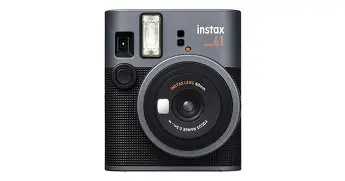
However, there is an interesting overlap. Many professional photographers who own the Sony 28-70mm F2 GM often carry an Instax Mini 41 in their bag. Why? Because the Instax serves as a bridge between the photographer and the subject. In a professional portrait session, firing off a few Instax frames and giving them to the client creates an immediate bond and breaks the ice, while the Sony handles the heavy lifting of the final high-resolution assets.
Technical Comparison Table
| Feature | Fujifilm Instax Mini 41 | Sony FE 28-70mm F2 GM |
|---|---|---|
| Category | Instant Analog Camera | Professional Digital Zoom Lens |
| Aperture | Fixed (Automatic Adjust) | Constant f/2.0 |
| Focusing | Fixed / Close-up Mode | XD Linear Motor (Super Fast) |
| Medium | Instax Mini Film (Chemical) | Digital Sensor (RAW/JPEG) |
| Build | Polycarbonate Plastic | Magnesium Alloy / Weather-Sealed |
| Weight | Approx. 300g (without film) | Approx. 918g |
Buying Guide: Which Camera Gear Fits Your Lifestyle?
Choosing between these two—or deciding to own both—depends on several factors including budget, intended use case, and how much you value post-processing. Below is a breakdown of which path you should take based on common photographer profiles.
The Social Butterfly and Hobbyist
If your primary goal is to capture memories at parties, weddings, and weekend trips without the burden of gear management, the Fujifilm Instax Mini 41 is the clear choice. It is affordable upfront and invites participation from everyone in the room. You don't need to worry about bit depth or dynamic range; you only need to worry about whether or not you have enough film in your pocket. It is the definitive camera for those who want to live in the moment rather than document it for a portfolio.
The Working Professional
If you are a wedding or event photographer looking to streamline your workflow without sacrificing the "prime lens look," the Sony FE 28-70mm F2 GM is a mandatory consideration. Its ability to replace a bag full of lenses while providing superior autofocus and sharpness is invaluable. The price and weight are professional considerations that pay for themselves in the quality of the final galleries and the reduction in lens-swapping during critical moments.
The Content Creator
For those who straddle the line between art and social media, the Sony offers the high-end video capabilities needed for 4K or 8K production, while the Instax provides the "behind-the-scenes" charm that audiences love. In this use case, the Sony is your tool for the main feed, and the Instax is your tool for the "human" touch that keeps followers engaged.
Real-World Use Cases
Consider a destination wedding. The professional photographer arrives with a Sony A1 paired with the 28-70mm F2 GM. From the 28mm wide shots of the venue to the 70mm f/2 portraits of the bride, the lens performs flawlessly, capturing every detail of the lace and the tears in the groom's eyes. The images are sharp enough to be printed on a billboard. However, during the reception, that same photographer pulls out an Instax Mini 41. They take a quick photo of the couple laughing at the head table, wait a minute for it to develop, and hand it to them. That physical print often becomes a more cherished memento than the thousands of digital files delivered weeks later.
In another scenario, imagine a street photographer. Using the Sony 28-70mm F2 GM, they can stand at a distance and capture candid moments with incredible bokeh, isolating their subjects from the urban chaos. But if they want to engage with their subjects, the Instax Mini 41 is a "magic trick." It lowers people's guards and turns the act of photography into a collaborative gift. These two cameras, while technically worlds apart, both serve the core purpose of photography: capturing a slice of time.
Looking for the best Cameras & Photography deals on Amazon?
Shop Amazon →Understanding the Costs Beyond the Sticker Price
When purchasing the Sony 28-70mm F2 GM, the cost is largely front-loaded. You pay a high price initially, and your ongoing costs are minimal (electricity for charging batteries and storage for digital files). It is a long-term investment in your craft. The lens is likely to hold its value well over time, as G Master optics are legendary for their longevity.
Conversely, the Fujifilm Instax Mini 41 is a "razor and blades" model. The camera itself is remarkably inexpensive, often costing less than a high-end camera bag. However, the cost of film is cumulative. Over several years, a prolific Instax shooter can easily spend more on film than the original cost of a mid-range digital body. Buyers must decide if they prefer the low entry barrier or the long-term efficiency of digital storage.
Conclusion
The "real truth" regarding these two vastly different camera products is that they don't actually compete with each other; they compliment the diverse needs of the modern visual communicator. The Fujifilm Instax Mini 41 is a triumph of fun, simplicity, and tangible nostalgia. It reminds us that photography is, at its heart, about the joy of seeing and sharing. It excels in casual environments where the pressure of perfection is absent.
The Sony FE 28-70mm F2 GM is a triumph of human ingenuity and optical precision. it is a tool for those who see light and shadow as a professional language and who require the absolute best performance that 21st-century technology can provide. It is the definitive "do-it-all" lens for the high-end digital era.
Whether you choose the analog charm of the Instax or the digital supremacy of the Sony G Master, the best choice is always the one that makes you want to get out and shoot. For some, that is the smell of developing chemicals and a clicking shutter; for others, it is the silent, instant lock of an eye-tracking autofocus system and the promise of a perfect RAW file. Both are valid, both are powerful, and in the right hands, both are capable of creating masterpieces.