The Truth About the Even Realities G2 Smart Glasses: Pros, Cons, and Verdict
Introduction
The Even Realities G2 smart glasses arrive in an era where wearable displays are migrating from novelty to productivity tools. Positioned between compact consumer AR eyewear and full mixed-reality headsets, the G2 promises to provide a lightweight, laptop-friendly way to extend screens, share immersive content, and augment real-world tasks without the bulk of traditional headsets. This review examines the G2 from the perspective of typical laptop buyers and power users—professionals who want portable multi-window workspaces, students who need flexible study setups, and creators seeking additional display real estate for editing or reference material.
Readers will find an analysis of the G2’s design, optics, performance, software ecosystem, real-world use cases, and practical limitations. The goal is to present a balanced, evidence-based assessment to help buyers decide whether the G2 fits their needs and workflows.
Product overview and positioning
The Even Realities G2 is marketed as a consumer-to-prosumer pair of AR smart glasses intended to function as a personal display and augmented overlay device. It targets users who want:
- Secondary screen capability for laptops and mobile devices;
- Hands-free notifications, calls, and simple interactions;
- Lightweight mixed-reality features (transparent overlays, contextual widgets) rather than full 6DoF VR immersion;
- All-day wearability for travel, meetings, and desk work.
Priced to compete with other light AR wearables, the G2 emphasizes portability and compatibility with mainstream operating systems, rather than trying to replace a desktop monitor or specialist AR hardware used in industrial settings.
Design and comfort
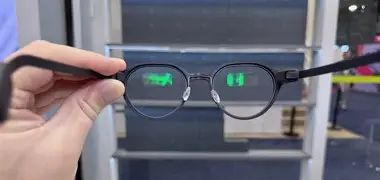
Design is a crucial factor for everyday wearable devices, and the G2 leans towards a classic eyeglass silhouette with a slightly bulkier temple housing to contain optics and electronics. Key design attributes include:
- Weight and balance: The G2 attempts to distribute weight along the temples rather than the nose bridge; this helps reduce pressure on the nose during extended sessions.
- Adjustable fit: A combination of removable nose pads and temple adjustments accommodates different face shapes and allows prescription lenses to be used with inserts or clip-ins.
- Aesthetic: A subdued, professional look reduces social friction in meetings and public spaces compared with theatrical headsets.
For laptop-centric users, the G2’s comfort during multi-hour sessions matters. The G2 generally performs well for 1–3 hour bursts, though heavier users may notice fatigue after prolonged continuous use. Users who alternate with traditional monitors are less likely to experience discomfort.
Optics, displays, and field of view
The core of any smart glasses experience is the display technology. The Even Realities G2 uses a waveguide-based projection system designed to overlay content on the wearer’s natural view. Important characteristics:
- Resolution and sharpness: The G2 prioritizes readable text and sharp UI elements at typical viewing distances (about arm’s length). For document editing and spreadsheets, this is the most important metric, and the G2 holds up reasonably well.
- Field of view (FOV): The G2 provides a modest FOV that is wider than clip-on heads-up displays but smaller than full-headsets. This balance enables an unobtrusive overlay without cutting off peripheral vision, but it limits fully immersive applications.
- Brightness and outdoor visibility: Waveguide optics struggle in very bright sunlight. The G2 works indoors and in shaded outdoor conditions, but direct sunlight reduces contrast and legibility.
Overall, the G2’s optics are optimized for productivity overlays—documents, chat windows, and reference material—rather than photorealistic mixed-reality blending. Buyers who expect cinematic visuals should consider larger MR headsets instead.
Connectivity and laptop integration
A major selling point for laptop users is how well smart glasses integrate with existing workflows. The G2 offers multiple connectivity paths:
- USB-C wired mode: Low-latency wired connection for video and power. This mode is recommended for demanding productivity tasks, virtual displays, and video conferencing.
- Wi‑Fi streaming: Wireless display streaming using a companion app can free users from cables, though latency depends on network conditions and router quality.
- Bluetooth: For pairing input devices (keyboard, mouse), audio streaming, and low-bandwidth notifications.
Compatibility with Windows and selected macOS versions is provided via the G2 desktop client, which exposes the glasses as an external display or renders virtual application windows in mixed reality. For users of Linux, compatibility may be limited or community-driven at launch. When using a laptop as the primary compute platform, the wired USB-C mode delivers the most consistent experience with minimal lag and robust display fidelity.
Input, controls, and interaction model
The G2 supports a hybrid interaction model:
- Touch and physical buttons: Temple-mounted touch zones and discreet buttons for common actions—accepting calls, cycling windows, or muting notifications.
- Gesture control: Basic hand-tracking for swipe and pinch gestures; useful for quick interactions but not as precise for complex editing tasks.
- Companion app and keyboard support: A full featured companion app on laptops and phones allows window placement, app launching, and settings. Standard keyboards and mice pair via Bluetooth for heavy input work.
For laptop users accustomed to keyboard-and-mouse workflows, the G2 augments rather than replaces input: it allows eyes-free glanceable data while typing on a physical keyboard.
Find top-rated Laptops & Computers products at great prices.
Browse Now →Audio, battery life, and practical daily use
Audio is handled through on-frame directional speakers that enable ambient awareness, or via Bluetooth earbuds for private listening. The G2 favors an open-ear design so the wearer remains connected to the environment—an important safety consideration in offices and public spaces.
Battery life is a trade-off that buyers should evaluate relative to intended use:
- Typical use: 3–6 hours of mixed use (notifications, occasional streaming, and a few productivity windows) on a single charge.
- Extended sessions: For prolonged laptop work, the wired USB-C mode can power the glasses continuously; otherwise, users will need to plan for mid-day recharges or portable battery packs.
In real-world contexts—commuting, short meetings, and on-the-go presentations—the battery life is adequate. For all-day desk work without breaks, the requirement for periodic charging is worth noting.
Software ecosystem and apps
The G2’s utility hinges on software. The companion desktop client enables virtual windowing, screen mirroring, and basic AR apps (note-taking widgets, browser overlays, and notification layers). Important considerations:
- Productivity focus: The G2 excels at displaying multiple reference windows, email, and chat feeds without requiring additional monitors.
- Third-party apps: Integration with mainstream communication apps (video conferencing, messaging, and cloud docs) is often handled through standard screen-share or overlay modes rather than native AR-aware experiences.
- Developer support: SDKs and APIs allow developers to prototype productivity and collaboration tools, which bodes well for the platform’s future growth if adoption increases.
Buyers should check whether the specific apps they rely on are supported in a usable way—native mixed-reality versions are limited at launch, so screen-mirroring remains the most common workflow.
Security, privacy, and data considerations
Smart glasses introduce new privacy questions. The G2 addresses some concerns via:
- Indicator lights: Visual cues signal when sensors or cameras are active (if equipped), which helps in shared environments.
- Local processing: Sensitive voice and gesture processing is handled primarily on-device where possible to minimize cloud exposure.
- Enterprise features: For corporate buyers, device management policies and firmware controls help with deployment and access restrictions.
Users should review the privacy policy and enterprise management options before deploying the G2 in shared workspaces.
Real-world use cases
The Even Realities G2 shines in several practical scenarios where laptop users commonly look for flexibility:
- Portable multi-monitor setup: Traveling professionals can create an extra virtual display without carrying a physical monitor. This is useful for email, reference docs, and monitoring dashboards while a laptop screen hosts primary tasks.
- Video conferencing: The G2 allows a presenter to keep notes or speaker cues visible while maintaining eye contact with the laptop camera. It can improve presentations and reduce reliance on printed notes.
- Reading and research: Academics and researchers can view PDFs and reference material as floating windows, minimizing context switching between apps.
- Creative workflows: Photo and video editors can keep tool palettes and color scopes in an auxiliary overlay, preserving the laptop’s main window for a timeline or canvas.
- On-site inspections and fieldwork: For light AR overlays showing checklists and site data, the G2 is less intrusive than full helmets used in industrial AR.
Pros & Cons
Pros
- Portable productivity: Adds usable display real estate without external monitors, ideal for travel and compact setups.
- Comfort-first design: Lightweight frame and balanced weight distribution for shorter to moderate sessions.
- Good for laptop integration: USB-C wired mode provides low-latency display and power for stable desktop use.
- Ambient audio: Open-ear speakers allow situational awareness during use.
- Professional aesthetic: Business-friendly look that works in meetings and public spaces.
Cons
- Limited field of view: Not suitable for fully immersive mixed-reality experiences; overlays feel constrained compared with larger headsets.
- Battery life constraints: Multi-hour continuous use requires planning for recharging or wired operation.
- Sunlight limitations: Optical waveguides reduce legibility in direct sunlight, restricting outdoor use.
- App ecosystem: Native AR apps are limited; much functionality depends on screen mirroring rather than AR-native experiences.
- Price-to-feature trade-offs: Buyers should weigh whether a portable display meets their needs or if dedicated monitors/headsets are better for specific tasks (e.g., gaming, photorealistic AR).
Comparison table
| Feature | Even Realities G2 | Nreal Air (example competitor) | High-end MR Headset (example) |
|---|---|---|---|
| Primary use | Portable productivity & AR overlays | Media & casual AR, compact display | Immersive mixed reality, enterprise apps |
| Form factor | Glasses-like with temple electronics | Glasses-like, very compact | Bulkier headset with full enclosure |
| Field of view | Moderate | Smaller-moderate | Wide / immersive |
| Best with laptops? | Yes—virtual monitor and wired mode | Yes—media and simple overlays | Possible but overkill for monitor replacement |
| Battery life | 3–6 hours typical, extendable by wired mode | 3–5 hours | Varies, often shorter for full MR features |
| Outdoor visibility | Limited in direct sunlight | Limited | Better in controlled lighting |
| Price category | Mid-range | Lower to mid-range | High-end / premium |
Buying guide: what to check before purchasing
Smart glasses are more personal and workflow-dependent than most tech purchases. The following checklist helps align expectations and ensures the G2—or any similar device—meets real needs.
1. Intended workflows
Identify the primary use case. If the goal is to replace a second monitor for spreadsheet work, focus on text clarity, latency, and laptop integration. If the interest is in AR gaming or photorealistic experiences, expect better results from purpose-built MR headsets.
2. Compatibility with existing systems
Confirm OS support and any driver requirements for Windows, macOS, or Linux. Check whether the vendor’s companion app supports the laptop model and whether low-latency wired modes are available for the systems in use.
Find top-rated Laptops & Computers products at great prices.
View Offers →3. Field of view and display quality
Look for demonstration units where possible. Field of view determines how comfortable virtual windows feel; display sharpness and font rendering matter for productivity use. Request to see text-heavy content rendered on the device.
4. Comfort and fit
Try the glasses for at least 30–60 minutes if possible. Evaluate nose pad comfort, temple pressure, and whether prescription lens options are supported. Comfort varies significantly between users.
5. Battery and power options
Decide if wired operation is acceptable during long laptop sessions, or whether a standalone battery is needed. Check charging speed and whether fast-charging options exist.
6. Ecosystem and app availability
Investigate how the glasses handle the apps relied upon daily. The maturity of the companion app and third-party integrations will determine practical utility.
7. Privacy and workplace policy
Confirm workplace rules regarding wearable cameras and recording. Even without an active camera, some organizations restrict visible wearables. Check whether the device provides clear indicators when sensors are active and whether enterprise management is available.
8. Support and warranty
Check warranty length, firmware update policies, and the availability of replacement parts (nose pads, temple covers, charging cables). Good vendor support makes long-term ownership less risky.
Who should buy the Even Realities G2?
The G2 is a strong candidate for:
- Frequent travelers: Professionals who need extra screen real estate in transit without carrying a physical monitor.
- Remote workers and hybrid meeting attendees: People who want private notes and reference materials visible while on camera.
- Students and researchers: Those who benefit from side-by-side readings of references and note-taking apps.
- Field technicians with light AR needs: Workers needing checklists and simple overlays without heavy headgear.
The G2 is less appropriate for users who demand wide FOV immersive gaming experiences, long continuous all-day use without charging, or outdoor AR applications that require high sunlight visibility.
Conclusion
The Even Realities G2 smart glasses carve out a useful niche for laptop users who want modest, practical mixed-reality features and an unobtrusive way to add virtual display space. They balance comfort, professional styling, and useful integration with laptops, making them particularly appealing to traveling professionals, remote workers, and students. However, compromises remain: field of view, battery endurance, and a nascent app ecosystem limit the G2’s ability to fully replace traditional monitors or premium mixed-reality headsets.
For buyers whose workflows prioritize portability and glanceable productivity—secondary windows, meeting notes, and lightweight AR overlays—the G2 represents a measured step forward. Prospective purchasers should evaluate compatibility with their laptop, try the glasses in person when possible, and consider whether wired operation or supplemental battery solutions fit their routines. In short, the G2 is a pragmatic choice for people who want to extend their laptop experience without sacrificing mobility, but it is not a one-size-fits-all replacement for more specialized displays or immersive headsets.