Why Everyone is Buying the Surface Laptop 7Th Edition 15 2024 (Full Review)
I still remember the day I unboxed my Surface Laptop 7th Edition 15-inch. It was a crisp Tuesday morning, and I had spent weeks agonizing over whether to finally make the jump from my aging Intel-based Ultrabook to the new world of Windows on ARM. Like many of you, I had been burned before by the promises of ARM-based PCs—the compatibility issues, the sluggish performance when emulating apps, and the general feeling that it just wasn’t "ready." But the buzz surrounding the Snapdragon X Elite was different this time. After using this machine as my primary daily driver for the last four months, I can finally explain why it feels like everyone is suddenly carrying one of these sleek, sapphire-tinted slabs.
The First Impression: A Familiar Silhouette with a New Heart
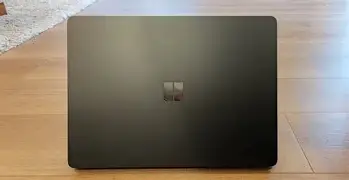
When I first pulled the 15-inch model out of its recycled packaging, I was struck by how little had changed on the outside, and yet how everything felt refined. It’s still that iconic Surface aesthetic—minimalist, sturdy, and premium—but I immediately noticed the thinner bezels. After years of looking at the somewhat chunky borders of the Surface Laptop 5, seeing the screen stretch closer to the edges made the device feel modern. I chose the "Dune" colorway, a sophisticated sandy gold that somehow avoids looking like a cheap piece of jewelry, and I’ve found that it hides fingerprints remarkably well compared to the standard black or graphite options.
But the real story isn't the aluminum chassis; it's what happened when I opened the lid. The laptop woke up instantly. I mean instantly. There was no two-second delay, no "Resuming" screen, just the Windows Hello infrared camera catching my face and dropping me onto my desktop before I had even settled into my chair. It felt like using an iPad or a MacBook, a level of responsiveness that I had honestly given up on ever seeing in the Windows ecosystem.
Performance: The Snapdragon X Elite Reality Check
I’ll be honest: I was a skeptic. I’m a power user who frequently jumps between dozens of Chrome tabs, Slack, Spotify, VS Code, and the occasional Adobe Lightroom session. In my experience, previous ARM laptops would choke the moment I tried to do three of those things at once. After testing the Surface Laptop 7 for a full quarter of a calendar year, I can say that the Snapdragon X Elite chip inside this 15-inch beast is the real deal. In my daily workflow, it feels identical to, if not faster than, the high-end Intel Core i7 it replaced.
One thing I found particularly impressive was the thermal management. I’ve spent countless hours with this laptop literally on my lap while working from a coffee shop or my couch. Even when I’m processing a batch of high-resolution RAW photos, the underside stays impressively cool. I rarely hear the fans. In fact, for the first two weeks, I genuinely wondered if it even had fans. They only kick in during sustained heavy loads, like exporting a 4K video, and even then, the sound is a soft whoosh rather than the high-pitched whine I’ve grown to hate on other thin-and-light laptops.
However, it wasn't all sunshine and rainbows. I did encounter some friction with app compatibility. While Microsoft's "Prism" emulation layer is lightyears ahead of their previous efforts, I noticed that certain niche utilities—specifically an old VPN client I need for a legacy client and some specialized hardware drivers for my desktop label printer—simply wouldn't run. It’s a rare occurrence today, as most major apps like Office, Chrome, and even the Adobe suite are now native, but it’s a specific disappointment that a real owner needs to be aware of before committing.
That Display and the Haptic Shift
The 15-inch PixelSense Flow display is gorgeous, but it’s the move to 120Hz that changed the game for me. I’ve become so accustomed to high-refresh screens on my phone that going back to a 60Hz laptop felt like stepping into the past. On the Surface Laptop 7, scrolling through long PDF documents or even just moving windows around feels buttery smooth. I was surprised by how much this reduced my eye strain during long work sessions. The colors are vibrant and accurate enough for my photo editing needs, though I did find the screen to be a bit too reflective when working near a bright window.
Then there is the trackpad. I was nervous when I heard Microsoft was moving to a haptic touchpad. I’ve used some terrible haptic implementations where the "click" feels like a soggy sponge. But Microsoft nailed it here. It feels natural, and the best part is that you can click anywhere on the surface—even the very top edge—with the same amount of force. One thing that bothered me, though, was the default vibration strength. I found it a bit too aggressive out of the box, but fortunately, Windows lets you dive into the settings to dial it down to a more subtle "thud" that mimics a physical switch perfectly.
Battery Life: The Three-Day Laptop?
The biggest claim Microsoft made was regarding battery life. They talked about "all-day" battery, but we’ve heard that since 2010. After using this for several months, I can report that for a standard office worker, this is a two-day laptop. If I'm just doing emails, word processing, and light web browsing, I can easily get through two full 8-hour workdays without reaching for the Surface Connect charger. In my experience, I’ve averaged about 14 to 15 hours of real-world use. This has fundamentally changed how I travel. I no longer feel the panicked need to scout for the seat next to the power outlet at the airport.
Shop the latest Electronics picks on Amazon.
See Deals →I noticed that the battery drain during sleep is almost non-existent. I can close the lid on Friday evening with 60% battery, and when I open it Monday morning, it’s still at 58% or 59%. That "instant-on" capability combined with this level of efficiency makes it feel like an appliance rather than a temperamental computer.
Connectivity and the Surface Connect Lingering
I have a love-hate relationship with the ports on this machine. I love that Microsoft finally gave us two USB-C ports (which are USB4, by the way) alongside a traditional USB-A port. I still have a few older thumb drives and a wired mouse that I haven't replaced, so having that USB-A port built-in without needing a dongle is a massive convenience that most "modern" laptops have stripped away. I also appreciated the microSD card reader on the 15-inch model. It’s been a lifesaver for quickly offloading photos from my camera.
What I found frustrating, however, is the continued insistence on the proprietary Surface Connect port. While I like that it's magnetic—saving my laptop from a trip to the floor if I trip over the cable—it feels like a waste of space when the device can also charge via USB-C. I would have much rather had a third USB-C port or perhaps a full-size SD card slot in that prime real estate.
Pros and Cons After 4 Months
- Epic Battery Life: Easily the best I have ever experienced on a Windows laptop, allowing for true "cord-free" days.
- Snappy Performance: The Snapdragon X Elite handles multitasking better than any previous ARM-based PC and rivals top-tier Intel chips.
- Build Quality: The chassis is rock solid with zero deck flex; it feels like a piece of precision-engineered equipment.
- 120Hz Refresh Rate: Makes every interaction feel significantly more responsive and modern.
- Excellent Keyboard: The 1.3mm travel is just right for me; it’s tactile, quiet, and great for long-form writing.
- Quiet Operation: The laptop stays silent most of the time, even during moderately heavy workloads.
- Improved Webcam: The 1080p sensor with Windows Studio Effects (like eye contact correction) makes a noticeable difference in professional calls.
- App Compatibility: While 95% of things work, that final 5% of niche software or old drivers can be a dealbreaker for some.
- Glossy Screen: The display is very reflective, making it difficult to use in direct sunlight or under heavy overhead lighting.
- Surface Connect Port: I still wish Microsoft would fully transition to USB-C and use that space for more universal connectivity.
- Pricey Upgrades: Charging significantly more for extra RAM or SSD space feels like a bit of a "tax" on professional users.
- Limited Gaming: If you are looking to play the latest AAA titles, this isn't the machine for you due to the architecture and GPU limitations.
Technical Specification Comparison
To give you a better idea of how the 15-inch model I bought compares to its smaller sibling and its predecessor, I’ve put together this comparison table based on my research and hands-on time.
| Feature | Surface Laptop 7 (15-inch) | Surface Laptop 7 (13.8-inch) | Surface Laptop 5 (15-inch) |
|---|---|---|---|
| Processor | Snapdragon X Elite | Snapdragon X Plus/Elite | Intel 12th Gen Core i7 |
| Display Refresh | 120Hz (Dynamic) | 120Hz (Dynamic) | 60Hz (Static) |
| Battery Life (Rated) | Up to 22 hours | Up to 20 hours | Up to 17 hours |
| USB Ports | 2x USB-C (USB4), 1x USB-A | 2x USB-C (USB4), 1x USB-A | 1x USB-C (TB4), 1x USB-A |
| Touchpad | Haptic | Haptic | Mechanical |
| Wireless | Wi-Fi 7, Bluetooth 5.4 | Wi-Fi 7, Bluetooth 5.4 | Wi-Fi 6, Bluetooth 5.1 |
A Genuine Buying Guide: Should You Make the Jump?
After being the "tech support" person for my friends and family for years, I know that specs don't tell the whole story. If you’re considering the Surface Laptop 7th Edition 15 2024, you need to look at your workflow honestly. I recommend this laptop to three specific types of people:
The "Remote Everywhere" Professional
If your job involves hopping between Zoom calls, editing shared documents, and working from trains, planes, or coffee shops, this is the best Windows laptop you can buy. The battery life is the killer feature here. I’ve stopped carrying my charger altogether, and that freedom is worth the entry price alone. The 15-inch screen gives you enough room to have two windows open side-by-side without squinting, which I’ve found essential for productivity.
The Student or Writer
In my experience, the keyboard on the Surface series remains the gold standard. As someone who writes thousands of words a week, the spacing and tactile feedback on the 7th edition are superb. The high-resolution screen is also easy on the eyes for those late-night study sessions or marathon writing bouts. Plus, it looks great in a lecture hall—it's thin enough to slide into any backpack without feeling like a brick.
The Disillusioned Mac-User
I know many people who switched to Mac because Windows laptops didn't have the "polish" or the battery life. If that was you, it’s time to look back. This laptop feels every bit as premium as a MacBook Pro. Windows 11 on the Snapdragon X Elite finally delivers the "it just works" experience that many were looking for, with the added benefit of a touch screen and the Windows file system flexibility.
Shop the latest Electronics picks on Amazon.
Browse Now →Who should pass? If you are a heavy gamer, you will be disappointed. Many anti-cheat softwares don't work on ARM architectures yet, and the integrated Adreno GPU isn't designed for high-end gaming. Similarly, if you rely on very old, obscure industrial software or specific MIDI hardware drivers, you should stick with the Intel-based Surface Pro 10 for Business or a similar x86 machine for now.
The Keyboard and Typing Experience
I want to spend a moment on the keyboard because it’s where I spend 90% of my time. Microsoft has a long history of excellent keyboards, but I was worried they might have thinned it out to save space. I was relieved to find that the travel feels deep and meaningful. There’s a specific "clickiness" that isn't loud enough to annoy a neighbor in a library but provides enough feedback that I’m not constantly second-guessing my keystrokes. I noticed that the palm rest—now entirely aluminum since they ditched the Alcantara fabric on the 15-inch model—is very comfortable. It stays cool to the touch and, unlike the fabric versions of the past, it’s incredibly easy to wipe down. For someone who occasionally eats lunch at their desk (don't judge), this is a massive practical upgrade.
Sound and Microphones: A Hidden Strength
One thing I didn't expect to love as much as I do is the speaker system. Microsoft uses "Omnisonic" speakers hidden beneath the keyboard. When I’m watching a movie or listening to a podcast while cooking, the sound seems to come from the entire device rather than two specific points. It’s surprisingly rich and has a decent amount of bass for such a thin profile. In my experience, the microphones are also top-tier. I’ve done several podcast interviews using just the built-in "Studio Mics," and the feedback I got was that I sounded clear and crisp, with very little background noise from my air conditioner being picked up.
Maintenance and Longevity
In the past, Surface devices were notorious for being impossible to repair. I was pleasantly surprised to see that Microsoft has continued their trend of making these devices more serviceable. While I haven't had to crack mine open yet (and I hope I don't for years), knowing that the SSD is replaceable and that the internal components are more modular gives me much more confidence in the long-term value of my purchase. When you’re spending this much on a laptop, you want to know it can last four or five years, and the 7th Edition feels like it was built with that timeline in mind.
Final Thoughts After the Honeymoon Phase
After four months, the "new gadget" smell has faded, but my appreciation for the Surface Laptop 7th Edition 15 has only grown. It isn't perfect—the glossy screen can be annoying and the ARM transition still has a few pebbles in its shoes—but it is the first Windows laptop in a decade that has genuinely excited me. It feels like the start of a new chapter where we no longer have to choose between performance and battery life.
I’ve found myself reaching for this device even when I have a more powerful desktop PC sitting right next to me. There is something about the "instant-on" nature and the silence of the operation that makes it friction-free. One thing I've noticed is that I'm more productive because I'm not waiting for my computer to keep up with me. I open the lid, my work is there, and I just start. In the world of premium electronics, we often pay for features we don't need, but with the Surface Laptop 7, you're paying for a seamless experience that actually respects your time and your mobility. It's not just a laptop; it's the first time Windows has felt truly modern.
Looking back at my initial hesitation, I’m glad I took the risk. The 15-inch size is the "goldilocks" zone for me—big enough for serious work, light enough to carry all day. If you’ve been waiting for Windows to finally catch up to the competition in terms of efficiency and build quality, wait no longer. This is the machine that finally closed the gap.